
Direct Answer / Quick Summary
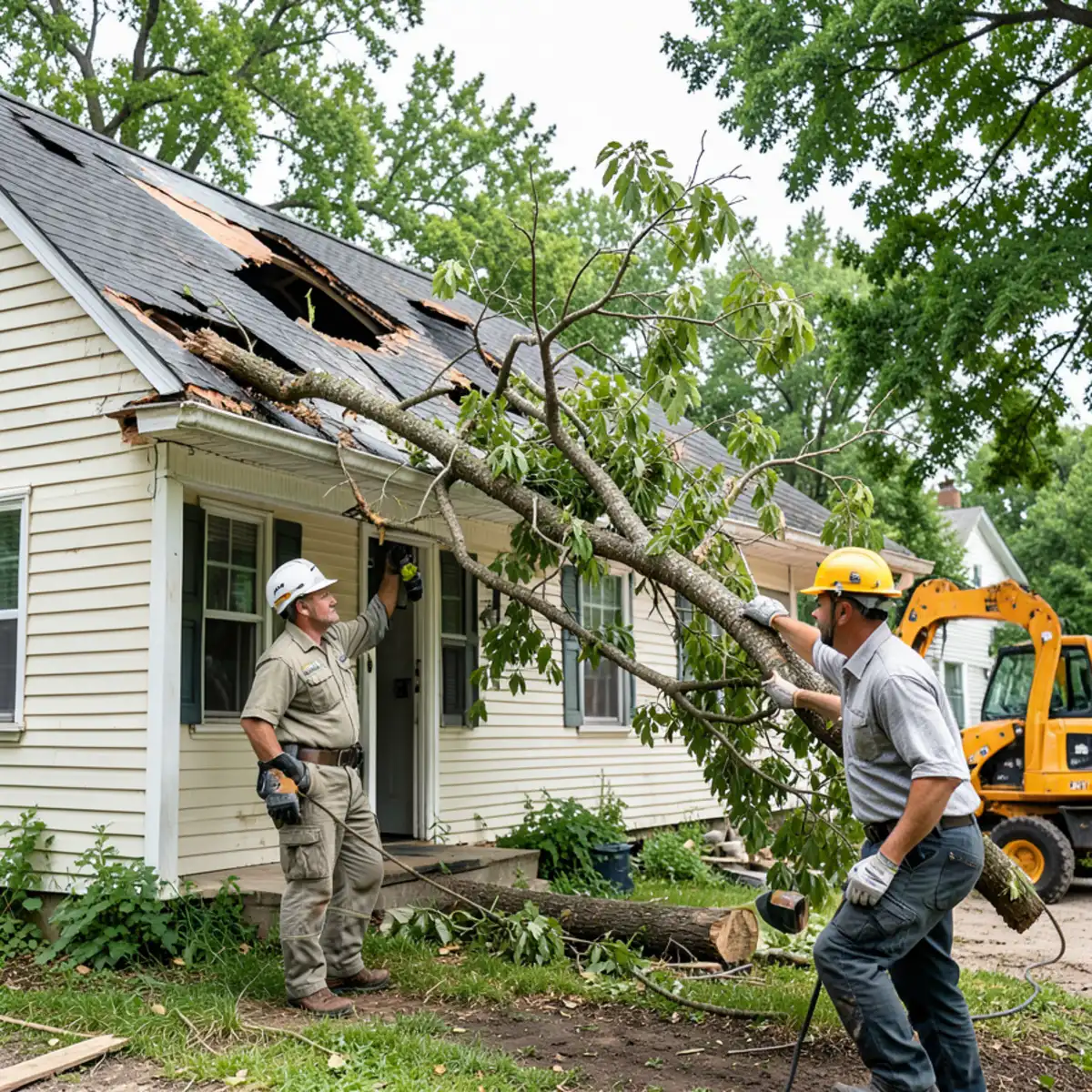
Michigan homeowners insurance pays for tree removal only when a fallen tree causes physical damage to an insured structure like your house, garage, or fence. If a tree falls on an open lawn without structural impact, removal is generally not covered. Learn how neighbor liability, deductibles, and debris limits apply.
The Core Rule: Structure Impact vs. Open-Lawn Fall
Following a severe thunderstorm, wind gust, or freezing ice storm in Mid-Michigan, one of the most common questions homeowners ask is: 'Will my homeowners insurance pay to remove this tree?' The answer in Michigan almost always hinges on a single question: Did the tree damage an insured structure?
Under standard Michigan homeowners insurance policies (such as HO-3 forms), insurance is designed to protect structures, not general landscaping. If a tree or heavy branch falls and lands on your house, attached garage, detached workshop, garden shed, or fence, your policy will typically cover the cost to extract the tree from the structure and repair all physical damage, subject to your deductible.
Importantly, the policy covers the physical extraction of the tree off the building roof or siding under your primary Dwelling Coverage (Coverage A) or Other Structures Coverage (Coverage B). Once the timber is safely on the ground, however, different policy sub-limits begin to govern the hauling and disposal of the wood.
The Open-Lawn Scenario
If a tree blows down in a storm and lands harmlessly on your open lawn, garden bed, or wooded area without hitting a building, driveway, or handicap ramp, standard homeowners insurance usually provides little to no coverage for removal or debris disposal.
Dealing with a Hazardous Tree in Lansing?
Call Total Tree Maintenance directly at (321) 677-9055 for immediate guidance and scheduled on-site estimates.
Lansing Hub
3105 S MLK Jr Blvd
Transparent Pricing
Free Itemized Written Scope
Safety First
ANSI Z133 & MISS DIG 811
Storm Ready
Fast Local Crew Dispatch
What If My Neighbor's Tree Falls on My House?
This is one of the most contentious property disputes after Michigan storms. If a tree growing in your neighbor’s yard falls across the property line and crushes your roof or destroys your fence, whose insurance pays?
Under Michigan common law, storm damage caused by weather events is considered an 'act of God.' As a general legal rule, your own homeowners insurance policy pays for the damage to your home, regardless of whose yard the tree was rooted in. Your insurance company will process the structural repairs and pay for tree extraction from your roof, minus your deductible.
The single exception occurs if your neighbor was legally negligent. If you can prove that the tree was dead, visibly rotted, or structurally hazardous prior to the storm, and that you had previously notified your neighbor in writing (such as via certified mail) requesting its removal, your insurer may pursue subrogation against your neighbor's insurer to recover repair costs and reimburse your deductible.
Expert Insight: The Danger of Lump-Sum Invoicing for Insurance Claims
A major pitfall for Lansing homeowners dealing with insurance adjusters is hiring a contractor who provides a vague, single-line invoice such as '$3,500 for Emergency Tree Removal.' Understanding how insurance claims adjusters review claims explains why this creates an immediate reimbursement problem.
Adjusters operate under strict policy categories. If an invoice shows an undifferentiated lump sum, the adjuster will often categorize the entire invoice under the policy's 'Debris Removal' sub-limit—which is frequently capped at just $500 or $1,000 per fallen tree. The homeowner is then left to pay the remaining $2,500 out of pocket.
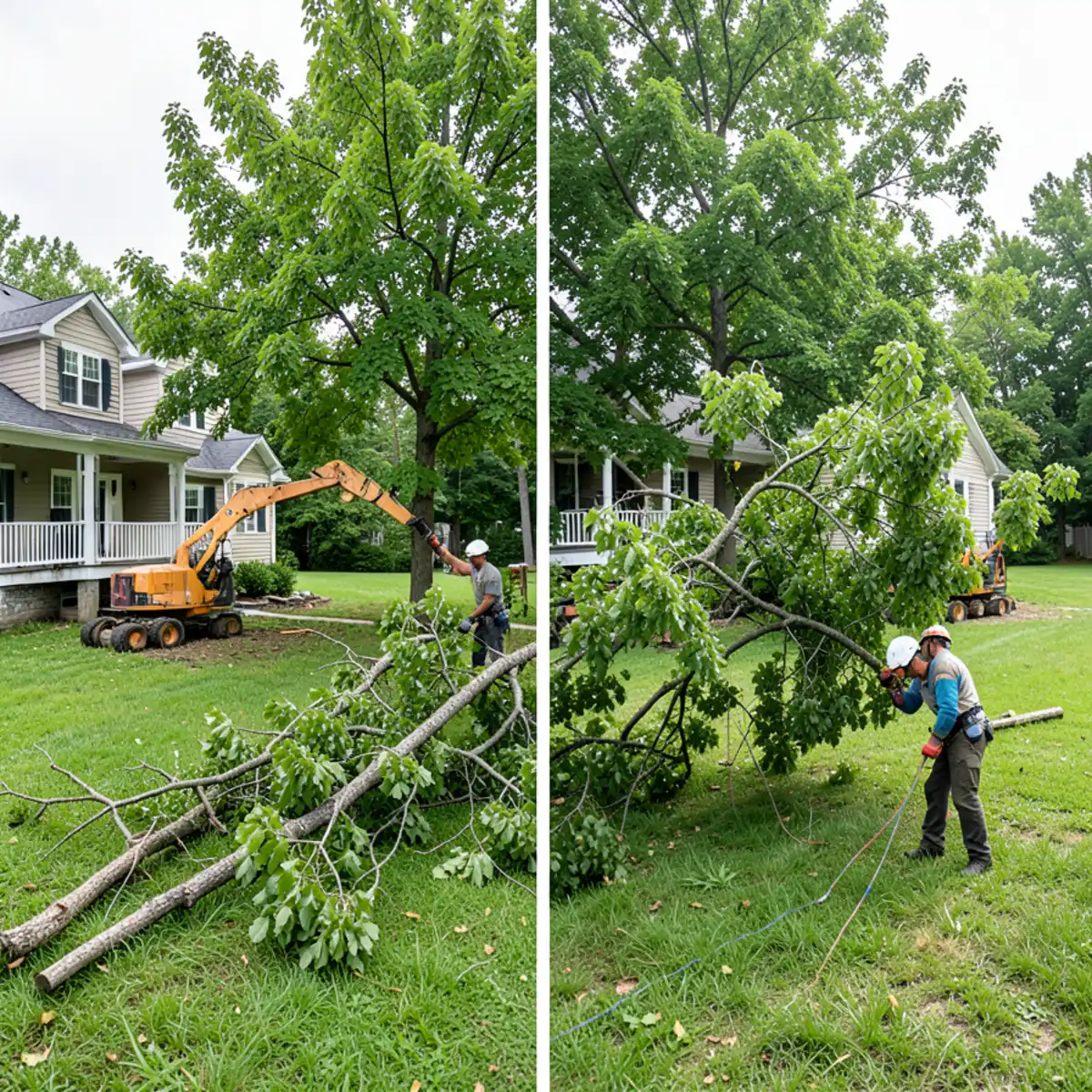
At Total Tree Maintenance, we write itemized insurance-compliant estimates and invoices that break down the scope into distinct operational codes: (1) Emergency Crane-Assisted Timber Extraction from Dwelling (covered under Dwelling Coverage A without debris sub-limits); (2) Immediate Weatherproofing & Heavy Poly Roof Tarping (covered under Reasonable Emergency Mitigation Repairs); (3) Ground Processing & Brush Chipping (applied against the debris sub-limit); and (4) Optional Below-Grade Stump Grinding. This transparency gives your adjuster the precise technical line items needed to maximize your eligible policy benefits.
Coverage Limits for Debris Hauling & Stump Grinding
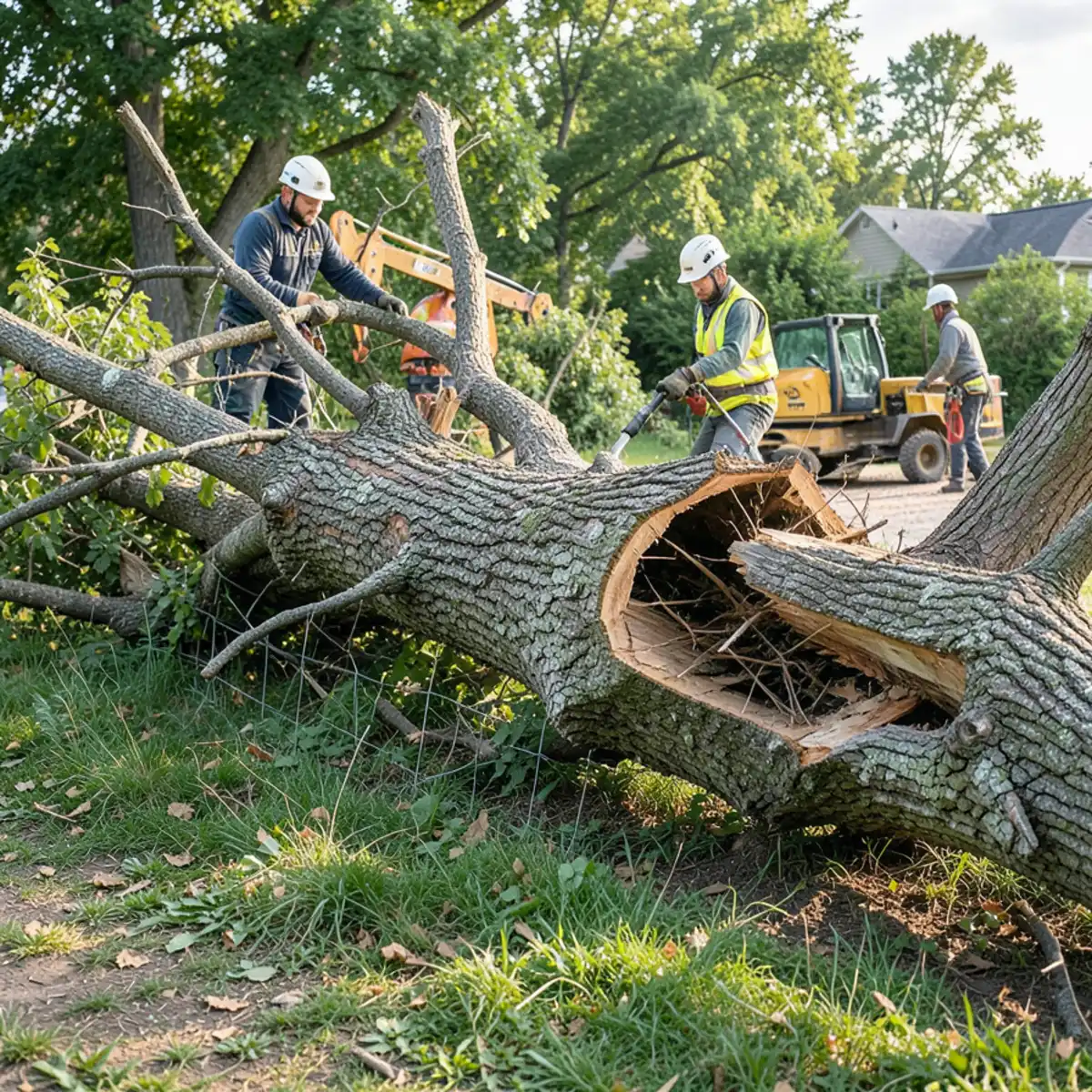
Even when insurance covers removing a tree that hit your house, policyholders must be mindful of sub-limits for debris removal. Most insurance carriers differentiate between two distinct operations:
| Tree Service Operation | Insurance Classification | Typical Policy Treatment |
|---|---|---|
| Lifting Tree Off Structure | Covered Structural Repair Cost | Covered under dwelling coverage limit; essential to prevent further damage. |
| Cutting & Hauling Lawn Wood | Debris Removal Endorsement | Often subject to a specific sub-limit (e.g., $500 to $1,000 per fallen tree). |
| Emergency Poly Roof Tarping | Property Mitigation Expense | Fully covered under the duty to mitigate secondary water damages. |
| Grinding the Underground Stump | Landscaping Restoration | Frequently excluded unless the stump directly impedes structural foundation repairs. |
Michigan Windstorm vs. Ice Storm Loss Profiles in Ingham County
Mid-Michigan experiences two distinct seasonal weather extremes that trigger tree insurance claims, each presenting different structural challenges for adjusters and tree crews.
Summer Severe Thunderstorms & Microbursts: During July and August, sudden convective storm cells frequently bring 60-to-75 mph straight-line winds to Greater Lansing. When torrential rains saturate clay-heavy topsoils, mature silver maples and white pines suffer complete root-plate failures, uprooting whole root balls and dropping heavy trunks horizontally across rooflines.
Winter Glaze Freezing Ice Storms: As seen during the historic December 2013 Lansing ice storm, freezing rain coats canopies in 0.5 to 0.75 inches of solid glaze ice. This adds up to 30 times the tree's normal branch weight. Rather than uprooting, large limbs shear off at secondary crotches, puncturing roof decking and bringing down electrical service drops. Documenting whether damage was caused by wind shear or ice loading helps adjusters verify policy-covered perils.
Four Steps to Maximize Your Insurance Claim Approval
If a storm tree damages your Lansing property, taking the proper documentation steps immediately will speed up your claim approval and ensure you receive the full reimbursement you are entitled to:
- 1. Photograph Everything Before Work Begins: Take clear, high-resolution photographs showing the tree’s point of contact on the roof, damaged decking, crushed gutters, and interior water leaks.
- 2. Mitigate Secondary Water Damage: Home insurance policies require homeowners to take reasonable steps to prevent further damage. Hiring a tree service to remove the tree and install an emergency waterproof roof tarp fulfills this obligation.
- 3. Request an Itemized Invoice: Ensure your tree removal contractor provides an invoice that explicitly breaks down crane extraction and structural removal from general yard haul-away.
- 4. Keep All Receipts: Retain all receipts for temporary tarps, emergency services, and boarding up windows for your adjuster review.
How Total Tree Maintenance Works with Michigan Insurers
Total Tree Maintenance has extensive experience working alongside major Michigan insurance carriers. When disaster strikes, we provide direct emergency crane extraction, install heavy weather-resistant roof tarps, and provide complete digital photo documentation alongside our itemized invoices to ensure your claim is processed smoothly.
Frequently Asked Questions
Frequently Asked Questions
Clear answers regarding local Lansing permit rules, tree removal costs, and emergency response.
Generally, no. Standard homeowners insurance policies only cover sudden, accidental physical losses. Preventative tree removal—even for a dead or dangerously leaning tree—is considered routine property maintenance and is the financial responsibility of the property owner.
Field operations crew based at 3105 S Martin Luther King Jr Blvd, Ste B, Lansing, MI. Specialists in hazardous tree removals, emergency storm recovery, ANSI A300 pruning protocols, and municipal tree codes throughout Ingham, Eaton, and Clinton counties.
Related Tree Services & Areas
Have Questions About Your Trees?
Our Lansing-based team provides honest evaluations and free on-site estimates. Call (321) 677-9055 today.
Lansing Hub
3105 S MLK Jr Blvd
Transparent Pricing
Free Itemized Written Scope
Safety First
ANSI Z133 & MISS DIG 811
Storm Ready
Fast Local Crew Dispatch